
Les petits changements qui ont fait de Godzilla un phénomène, de Monarch à Mothra
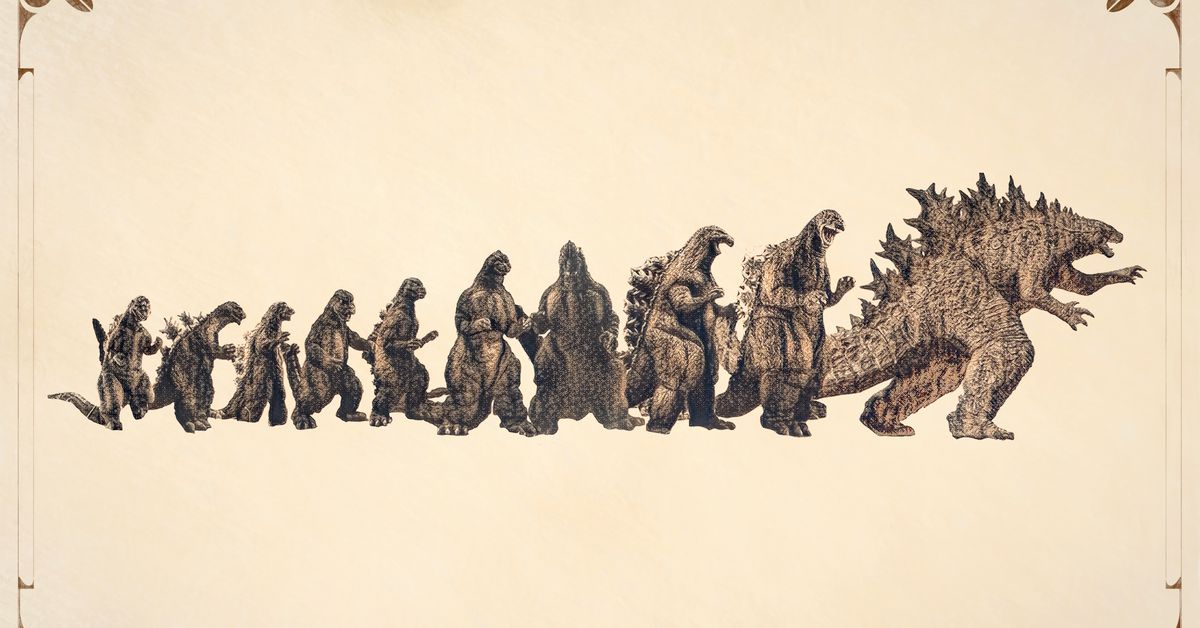
Godzilla and Its Evolution Throughout the Years
Godzilla, the fictional monster that has captured the hearts of millions for almost 70 years, has undergone numerous transformations on the big screen. From its menacing debut in 1954 to its more streamlined appearance in the 60s and 70s, Godzilla’s evolution is a fascinating journey worth exploring.
Godzilla (1954)
The first Godzilla, brought to life with a combination of suitmation and puppetry, was a menacing creation built for an unstoppable stomping charge across Tokyo. Every movement felt deliberate, and the thick legs and feet plowed through buildings with an apocalyptic presence.
Godzilla Raids Again (1955)
In the first sequel, Godzilla’s suit was notably different, with a leaner, goofier appearance as it prepared to wrestle with its first kaiju nemesis. The Big G had to get leaner, more nimble, and emotionally open to reflect its evolving role in the monster world.
King Kong vs. Godzilla (1962)
This era marked the beginning of Godzilla’s more reptilian appearance, geared towards combat readiness to face off against its primate foe, King Kong. The battle scenes were inspired by Japanese pro wrestling, emphasizing the monster’s muscular antics.
Mothra vs. Godzilla (1964) and Ghidorah, the Three-Headed Monster (1964)
Godzilla’s fourth suit reflected a sleeker appearance, allowing it to roll, wrestle, and take on formidable opponents. Its fighting stance defined Godzilla as ready for any challenge, portraying pure malice and grace.
Invasion of Astro-Monster (1965) and Ebirah, Horror of the Deep (1966)
As monster movies competed with similar offerings available on TV, Godzilla’s design became less menacing, with a sleeker form but very little musculature. Its head became more friendlier, evolving from a destructive force to a less scary monster.
Son of Godzilla (1967)
The suit reflects a more humanoid appearance, with a Godzilla that’s now a parent to a young offspring. Its design made the monster more relatable, but it inherited its problems as it struggled to look impressive from any angle.
Destroy All Monsters (1968), All Monsters Attack (1969), Godzilla vs. Hedorah (1971), and Godzilla vs. Gigan (1972)
A return to form for Godzilla, this suit was initially planned to be the final one. It was a perfect choice for a Godzilla that led an army of monsters, but its long tenure was evident as the suit was literally tearing apart on screen.
Godzilla vs. Megalon (1973), Godzilla vs Mechagodzilla (1974), and Terror of Mechagodzilla (1975)
The suit aimed to appeal to adolescent audiences, but adjustments were made to enhance its ferocity, especially when it faced off against its robot doppelganger. It marked the beginning of a new era for Godzilla with three different suit actors portraying the monster.
The Return of Godzilla (1984)
The Heisei era ushered in a more serious, dangerous Godzilla, reflected in the suit’s design with fangs for the first time since 1955. The bulkiness of previous suits was replaced by scaly bulk, emphasizing Godzilla’s menacing presence on screen.
Godzilla vs. Biollante (1989) and Godzilla vs. King Ghidorah (1991)
As Godzilla went back into monster combat mode, its suit appeared more reptilian than ever, with evident chest muscles and meaty legs. This era marked a shift to a more stoic conqueror, with an emphasis on laser beams and elaborate transformations in battle.
Godzilla vs. Mothra (1992)
The Heisei era suits marked a shift in Godzilla’s appearance, requiring a bit more…
Source : www.polygon.com
