
Documentaire sur Sylvester Stallone sur Netflix
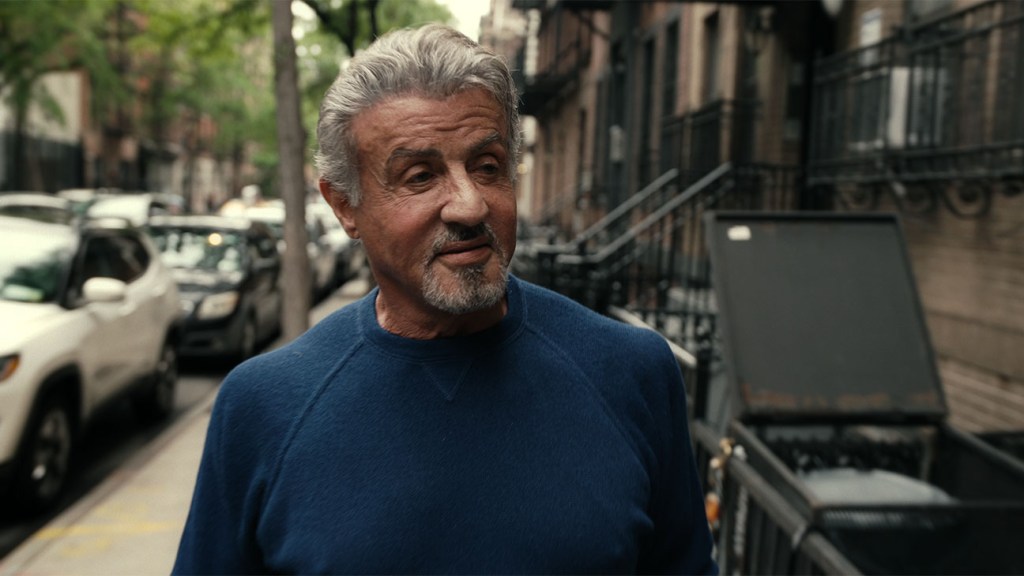
Netflix is set to release a new feature-length documentary called “Sly,” which revolves around the life and career of Sylvester Stallone. With moments of insight mixed with moments of avoidance, the documentary offers an introspective look at Stallone’s journey in the film industry.
A Candid and Introspective Look
“Sly” explores Stallone’s decision to move out of his lavish Los Angeles house, symbolizing his need for creative rejuvenation and a change of location. The documentary delves into his childhood, addressing his abusive father and eccentric mother. It highlights Stallone’s early relationship with movies as an escape and his admiration for classic cinematic heroism, including his influences from Hercules films.
Stallone’s personal candor peaks when discussing his family and the choices he had to make to prioritize his work. While he admits regrets and occasionally shares pictures of his family, the documentary conveniently omits any mention of his wives and focuses mainly on his late son Sage and their connection to the “Rocky” franchise.
Elisions and Phases
“Sly” often presents Stallone’s career in simplified phases, such as his comedic phase or his action-star phase. While he briefly mentions some of his films like “F.I.S.T.” and “Copland,” it’s clear that he views the latter as a failure. Surprisingly, “Creed” is conspicuously ignored, as Stallone doesn’t associate it with his own “Rocky” films.
The documentary primarily relies on Stallone himself as the main narrator, with only a few supporting voices, including Frank Stallone and John Hetzfeld. Other industry figures like Henry Winkler and Talia Shire make appearances, but they don’t add much to the overall narrative. Even Arnold Schwarzenegger’s participation feels redundant, as he echoes Stallone’s own words about their relationship.
An Effective Exploration of Legacy
Despite some flaws in execution, “Sly” ultimately succeeds in conveying Stallone’s legacy as an actor, writer, and director. The star’s ability to reflect on his own work and offer insights into his career path creates moments of poignancy in the documentary. However, the film’s emphasis on Stallone’s preferred narrative and the director’s reluctance to challenge him pose limitations to a more comprehensive exploration.
Source : www.hollywoodreporter.com
